
Last updated on September 8, 2026
Florida is home to many types of spiders, and most encounters around a property are harmless. However, discovering a black widow spider can understandably cause concern. Known for its distinctive appearance and medically significant venom, the black widow is one spider that homeowners should approach carefully rather than attempting to handle.
In St. Augustine, warm temperatures and abundant insect activity can provide spiders with favorable places to live and hunt. Black widows tend to prefer protected, undisturbed areas, which means they may establish webs in locations homeowners do not regularly inspect. Learning how to recognize potential black widow activity and knowing where these spiders may hide can help you make informed decisions about protecting your property.
What Does a Black Widow Spider Look Like?
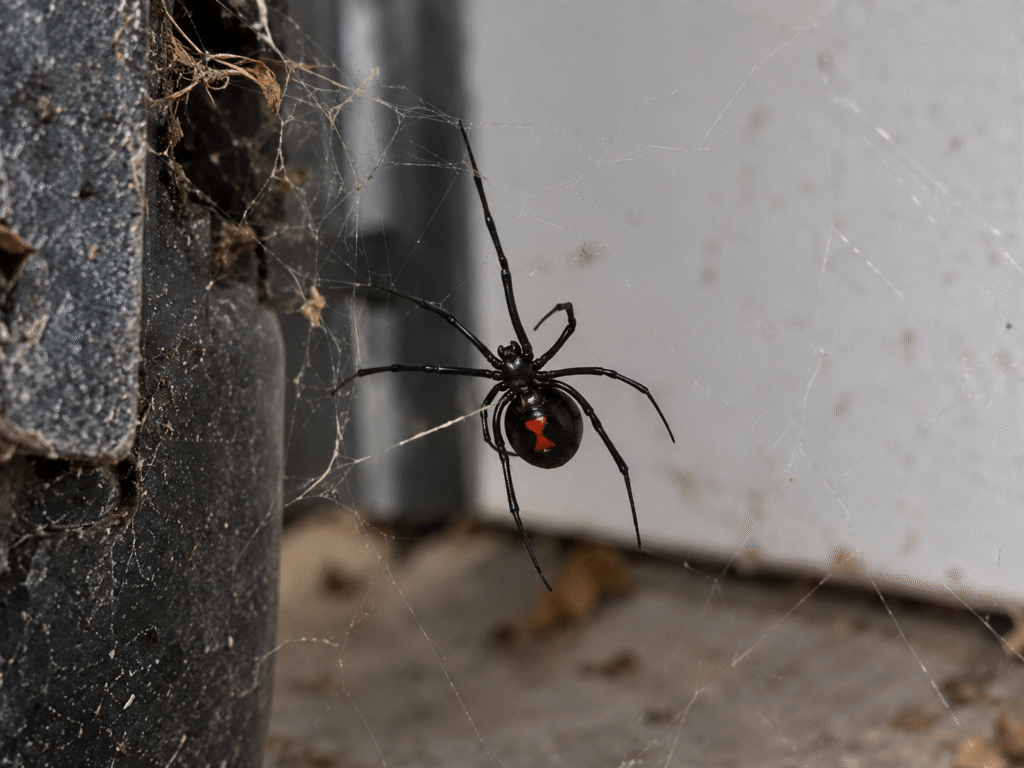
Adult female black widow spiders are typically the easiest to recognize. They generally have a shiny, dark body with a rounded abdomen. One of their best-known characteristics is a red or reddish-orange hourglass-shaped marking located on the underside of the abdomen.
However, homeowners should not rely solely on the hourglass marking when attempting to identify a spider. Appearance can vary depending on species, sex, and maturity.
Juvenile black widows and males can look considerably different from adult females. They may display lighter coloring or additional markings on their bodies.
If you encounter a spider that you believe could be a black widow, avoiding direct contact and having it professionally identified is safer than attempting to capture it yourself.
Where Do Black Widow Spiders Like to Hide?
Black widows generally prefer locations that provide protection and are not frequently disturbed. Around residential properties, this can include garages, sheds, storage areas, crawl spaces, wood piles, outdoor furniture, utility areas, and cluttered corners.
They may also establish themselves around landscaping materials, underneath objects that remain stationary for long periods, or inside outdoor structures.
This behavior is one reason homeowners should be cautious when moving items that have been sitting untouched. Boxes stored in a garage, gardening supplies, firewood, patio equipment, and similar objects can provide sheltered spaces.
Wearing gloves when handling stored materials and inspecting items before moving them can reduce the chance of accidentally coming into direct contact with a hidden spider.
What Does a Black Widow Web Look Like?
Unlike the symmetrical webs people often associate with spiders, a black widow spider typically constructs an irregular-looking web.
The web may appear tangled or disorganized rather than forming a neat circular pattern. It is generally constructed in a protected location where the spider can capture insects while remaining relatively concealed.
Finding an irregular web does not automatically mean black widows are present. Many spiders create webs that may look similar to an untrained observer.
However, repeatedly discovering dense webs in dark, sheltered locations can be a reason to inspect the area more carefully.
Why Might Black Widows Be Around Your Property?
Spiders generally remain in places where they have access to prey. A property with significant insect activity can therefore provide an attractive environment.
Exterior lighting, landscaping, moisture, outdoor clutter, and other conditions can contribute to insect populations around a home. In turn, those insects can provide food for spiders.
This connection is important when considering spider management. Simply removing one visible spider may not address the conditions that made the location appealing.
Reducing insect activity, cleaning webs, limiting clutter, and addressing potential hiding places can all contribute to making areas around the home less attractive to spiders.
Are Black Widow Spiders Dangerous?
Black widow spiders have venom that can cause medically significant symptoms. Bites can occur when a spider is accidentally disturbed or trapped against the skin.
Symptoms can vary, but a bite may cause pain and other reactions that warrant medical attention. Anyone who believes they have been bitten by a black widow should seek guidance from a medical professional or poison control, particularly if significant symptoms develop.
Children, older adults, and individuals with certain health concerns may require additional caution.
The safest approach around a suspected black widow is to avoid touching, crushing, or attempting to pick up the spider with bare hands.
How Can You Reduce Spider Hiding Places?
Making a property less inviting to spiders begins with reducing the places where they can remain undisturbed.
Garages and storage areas can be kept organized to eliminate unnecessary hiding spots. Items stored for extended periods can be placed in sealed containers rather than open cardboard boxes when practical.
Outdoor clutter should also be minimized. Firewood and building materials can be stored appropriately and away from frequently used areas. Regularly inspecting sheds, patios, outdoor furniture, and other protected spaces can help homeowners notice spider activity sooner.
Controlling other insects around the property is another important consideration because those insects provide a food source for spiders.
What Should You Do if You Find a Black Widow Spider?
Discovering a suspected black widow spider in St. Augustine, FL does not mean you need to panic, but it should be handled cautiously.
Avoid placing your hands near the spider or its web. Keep children and pets away from the immediate area and do not attempt to identify it by handling it.
If black widows are appearing repeatedly, or if spiders are being discovered near entrances, garages, patios, play areas, or other frequently used locations, professional pest control may be appropriate.
A pest control professional can evaluate the property for spider activity while also looking at environmental conditions that may be supporting their presence.
Protect Your St. Augustine Property From Unwanted Spiders
Spiders are a natural part of Florida’s environment, but potentially dangerous species are not something homeowners want establishing themselves around frequently used areas of their property.
South Country Pest Control helps St. Augustine homeowners manage spiders and other unwanted pests around their homes. Professional pest management can address current activity while also considering insect populations, hiding places, and other conditions that may be attracting spiders.
If you have discovered a black widow spider or suspect they may be living around your St. Augustine property, professional assistance can help you determine the appropriate next steps. Taking action early can reduce unwanted spider activity and help make garages, patios, storage areas, and other spaces around your home more comfortable to use.


